The future of particle therapy
When targeting tumours, protons and heavy ions offer distinct advantages compared to conventional X-ray radiotherapy. PTCOG president Marco Durante describes an exciting future for the technology and shares his vision for closer international cooperation between medicine, academia and industry.
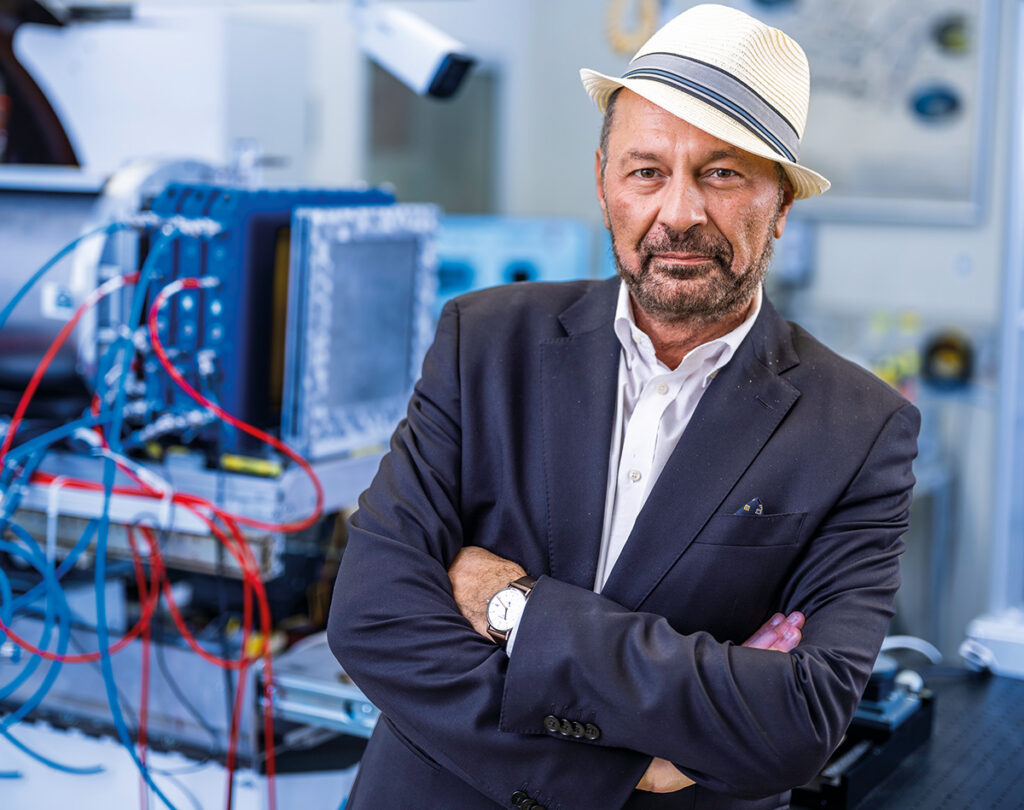
What excites you most about your research in 2025?
2025 has been a very exciting year. We just published a paper in Nature Physics about radioactive ion beams.
I also received an ERC Advanced Grant to study the FLASH effect with neon ions. We plan to go back to the 1970s, when Cornelius Tobias in Berkeley thought of using very heavy ions against radio-resistant tumours, but now using FLASH’s ultrahigh dose rates to reduce its toxicity to healthy tissues. Our group is also working on the simultaneous acceleration of different ions: carbon ions will stop in the tumour, but helium ions will cross the patient, providing an online monitor of the beam’s position during irradiation. The other big news in radiotherapy is vertical irradiation, where we don’t rotate the beam around the patient, but rotate the patient around the beam. This is particularly interesting for heavy-ion therapy, where building a rotating gantry that can irradiate the patient from multiple angles is almost as expensive as the whole accelerator. We are leading the Marie Curie UPLIFT training network on this topic.