TE-VSC progress chasing leaks
By Jose A. Ferreira on behalf of TE-VSC-IVO and TE-VSC-DLM insulation vacuum teams
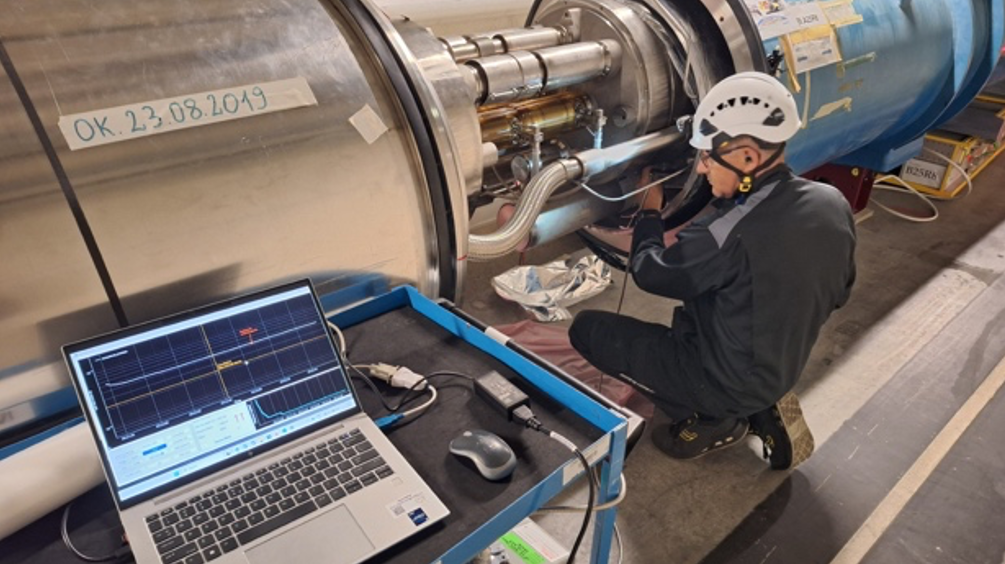
The LHC relies on more than 22 kilometres of superconducting magnets operating at cryogenic temperatures. To maintain these extremely low temperatures, the magnets are housed inside cryostats surrounded by an insulation vacuum. Detecting insulation vacuum leaks during LS3 provides a unique opportunity to investigate and repair them while the machine is warm and fully accessible, thereby minimizing the risk of performance degradation during future operation.
The main objective of the leak detection campaign is to re-evaluate all known leaks compatible with operation, verify that they have not deteriorated, and identify any new leaks that may have developed during the last thermal cycle.
All investigations must be completed before the cryogenic lockout, requiring close coordination between several teams and an efficient diagnostic process. This is particularly important around points 1 and 5, where HighLumi activities take place.
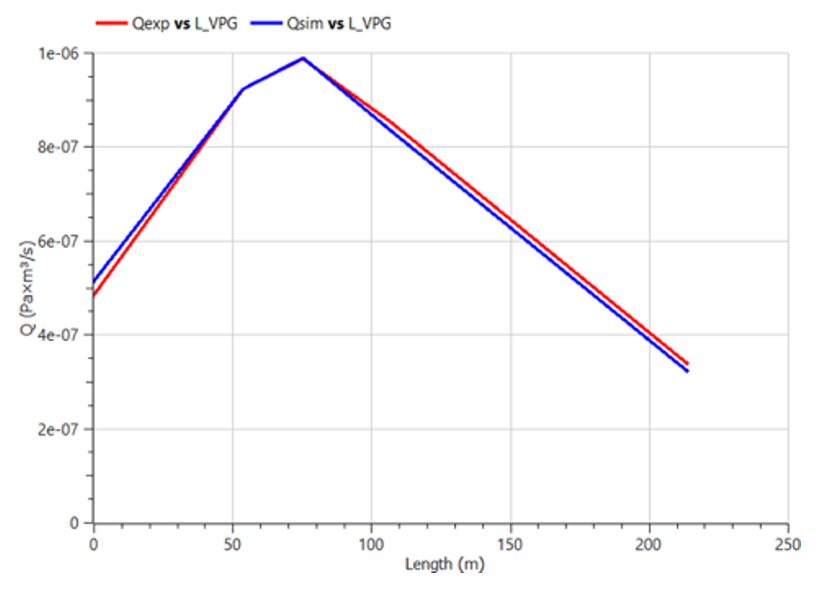
The investigation begins with the measurement of the total helium leak rate within the vacuum subsector. In collaboration with TE-CRG specialists, the leaking circuit is then identified. Once the source circuit has been determined, the next challenge is to localize the leak within the 214 metre long vacuum subsector. To achieve this, additional pumping groups are installed at strategic locations to obtain a detailed profile of the helium concentration along the sector. The resulting measurements are compared with dedicated simulation models that predict the expected helium distribution for a leak at different positions. By matching the measured and simulated profiles, the most likely leak location can be identified, as illustrated in Image 2.
After the suspected leak position has been determined and the subsector has been vented, TE-MSC teams open the interconnections around the area of interest. The investigation then enters its most demanding phase, where a combination of leak detection techniques is used to pinpoint the exact origin of the leak. For example, a recent leak discovered in arc 81 exhibited a dependence on temperature, requiring controlled temperature variations around the suspected location to modify the leak rate and facilitate its localization. Such cases demonstrate the importance of combining operational experience with flexible diagnostic methods.The systematic leak detection campaign performed during LS3 provides a unique opportunity to identify and correct non-conformities before the LHC returns to operation. Newly developed simulation tools significantly improve leak localization accuracy, reducing the search area and increasing the probability of successfully identifying the root cause.