
Improving Hospital Recovery: MARCHESE Builds a New Prototype
How a newly built prototype aims to prove the impact of contactless health monitoring
By Amedeo Habsburg & Roberto Cittadini
Monitoring vital signs is essential in hospitals worldwide. While contact-based devices usually pose no challenges, they can cause pain or be unusable in sensitive cases, such as with burn victims or newborns. The MARCHESE project is tackling this issue with a contactless health monitoring system. The prototype, completed earlier this year, demonstrates how heart and respiratory rates can be measured remotely, enhancing patient comfort and safety for healthcare workers.
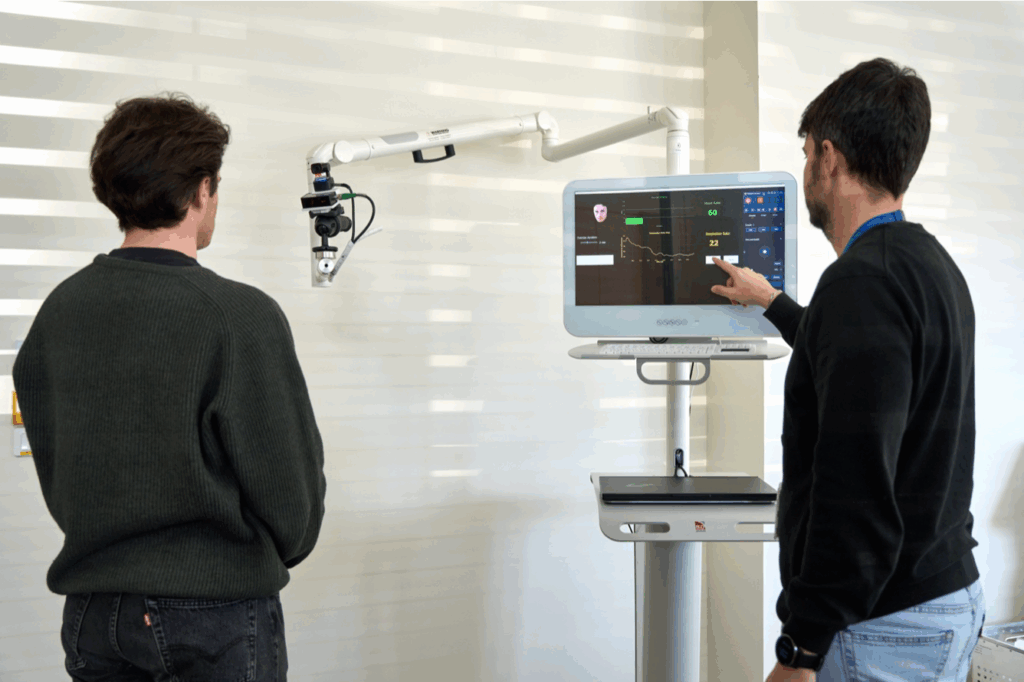
Originally developed within CERN’s Mechatronics, Robotics and Operations section to monitor LHC tunnel workers during emergencies, the technology soon showed promise for medical use. With support from CERN’s Medical Applications Budget, a design study evolved into a fully integrated prototype.
The device combines a laser distance sensor and RGB camera to capture chest movement and facial color variations, which indicate breathing and blood flow. These signals are processed by a machine learning algorithm, allowing an accurate reading of heart and respiratory rates. The system is mobile, includes a 5-meter retractable arm, and has an autonomous power supply.
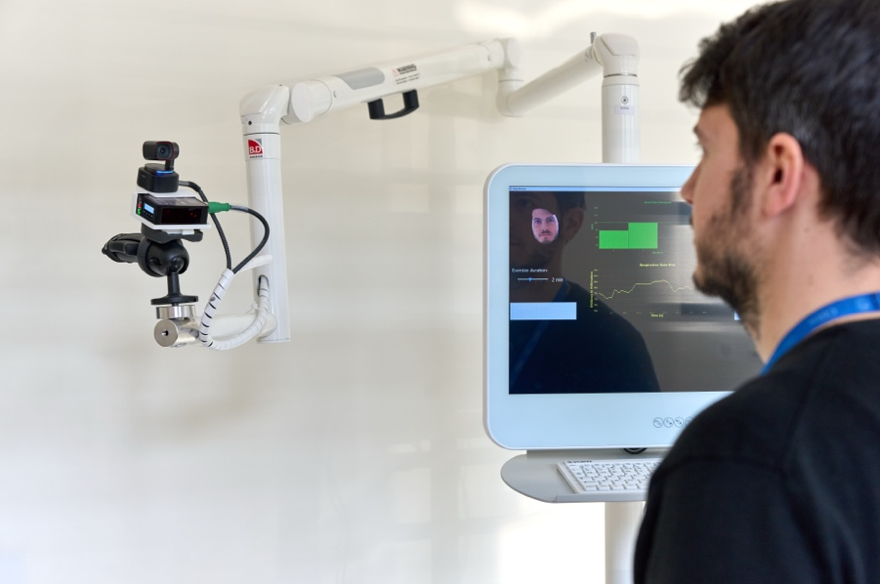
Heart rate is measured through subtle changes in skin color, imperceptible to the human eye but detectable via camera. Respiratory rate is determined by tracking the chest’s distance variation during breathing. The ML algorithm cross-analyzes both signals to improve accuracy.
Equipped with an onboard computer and intuitive software, the prototype is ready for hospital testing. Looking ahead, in collaboration with hospitals, the goal is to adapt the system for those it was designed to help: burn victims, the elderly, newborns, and others for whom contact monitoring is painful or impractical. If successful, MARCHESE could offer a more comfortable and dignified recovery process.