‘How I became a CERN Accelerator School teacher’
Michela Neroni, an Italian engineer, recounts her career journey that has led her to working at CERN and teaching a new generation of accelerator scientists
By Noemí Carabán Gonzalez (CERN)
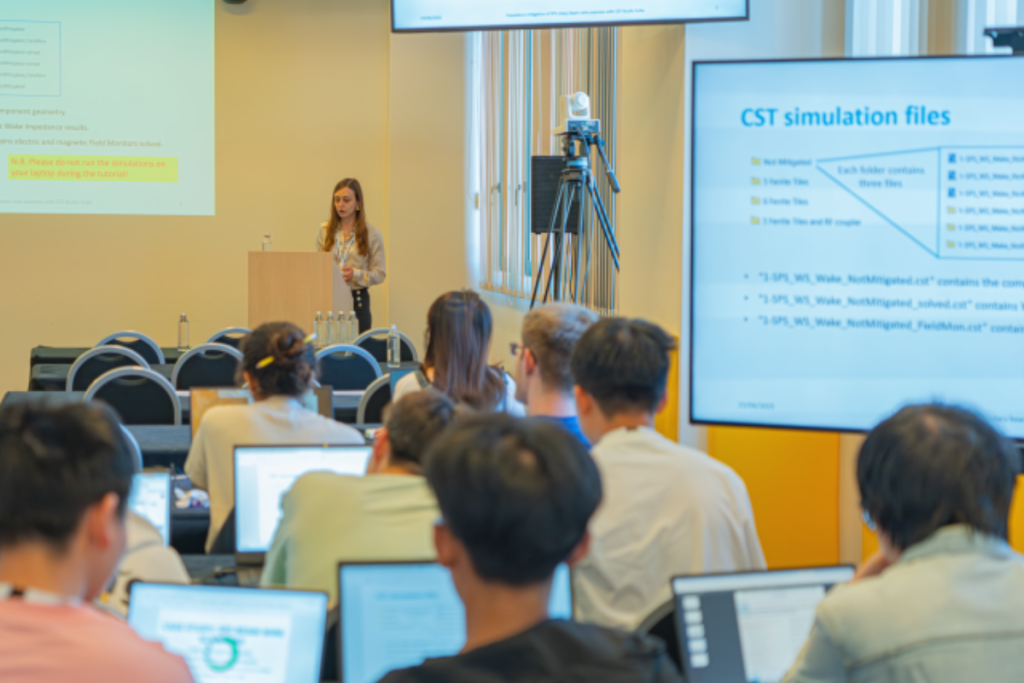
In the rapidly evolving world of accelerator science, progress depends not only on innovation but also on education — the kind that bridges theory, technology, and international collaboration.
Specialised schools like the CERN Accelerator School (CAS) ensure that knowledge in this field is not merely preserved but continuously passed on, refined, and expanded. Each course brings together early-career engineers, experienced physicists, and world-leading lecturers, nurturing the next generation of scientific experts who will power discoveries yet to come.
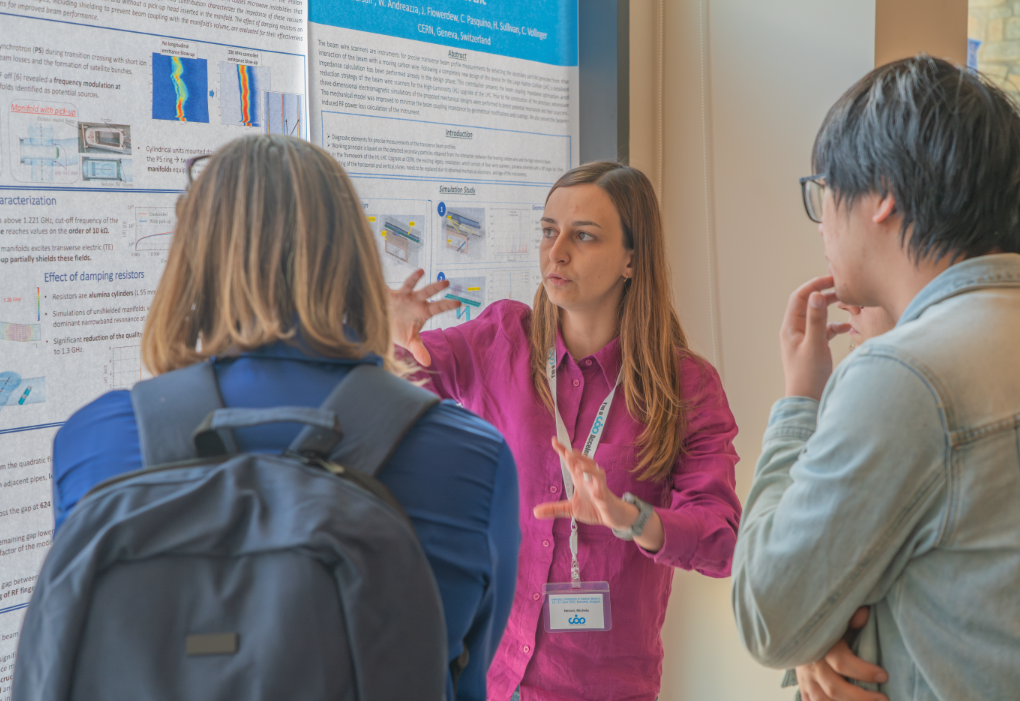
Among those who have walked this path is Michela Neroni, an Italian engineer whose journey through CAS embodies this spirit of continuous learning.
“When I started in electronics engineering, I didn’t imagine I’d one day be working in accelerator physics,” Neroni recalls. “But I discovered how electromagnetic field theory and radiofrequency measurements could connect to something as extraordinary as the world of particle accelerators.”