
CERN Timepix chips fly to the Moon
Six Timepix chips developed at CERN will measure the radiation environment inside the spacecraft that will orbit the Moon during NASA’s Artemis II mission
By Feza Tankut
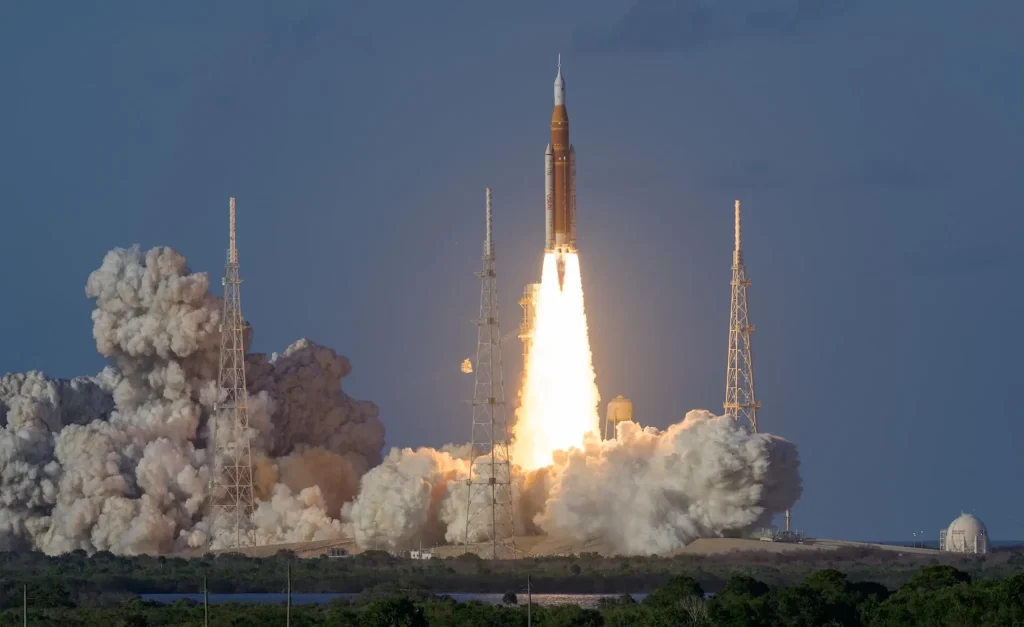
At 00:35 CEST today, the Artemis II mission successfully launched, marking the first human journey to the Moon since 1972. During their ten-day journey aboard the Orion spacecraft, the four astronauts are expected to receive tens of millisieverts of radiation, more than ten times what most people experience in an entire year on Earth. Understanding and managing this exposure is essential if humans are to continue to explore space safely.
This is precisely the role of the six Timepix chips on board Artemis II. Developed at CERN, they have been deployed through a collaboration with ADVACAM , a CERN partner specialising in photon-counting imaging technologies. The chips form part of NASA’s Hybrid Electronic Radiation Assessor (HERA) system, which is designed to monitor the radiation environment inside the Orion spacecraft. The system will measure the composition, intensity and energy of incoming particles in real time, helping scientists to assess the radiation exposure of both crew members and onboard electronics. …