HiRadMat facility: 15 years later
By Valeria Passaro, Paraskevi Alexaki, Nikolaos Charitonidis, Alice Goillot
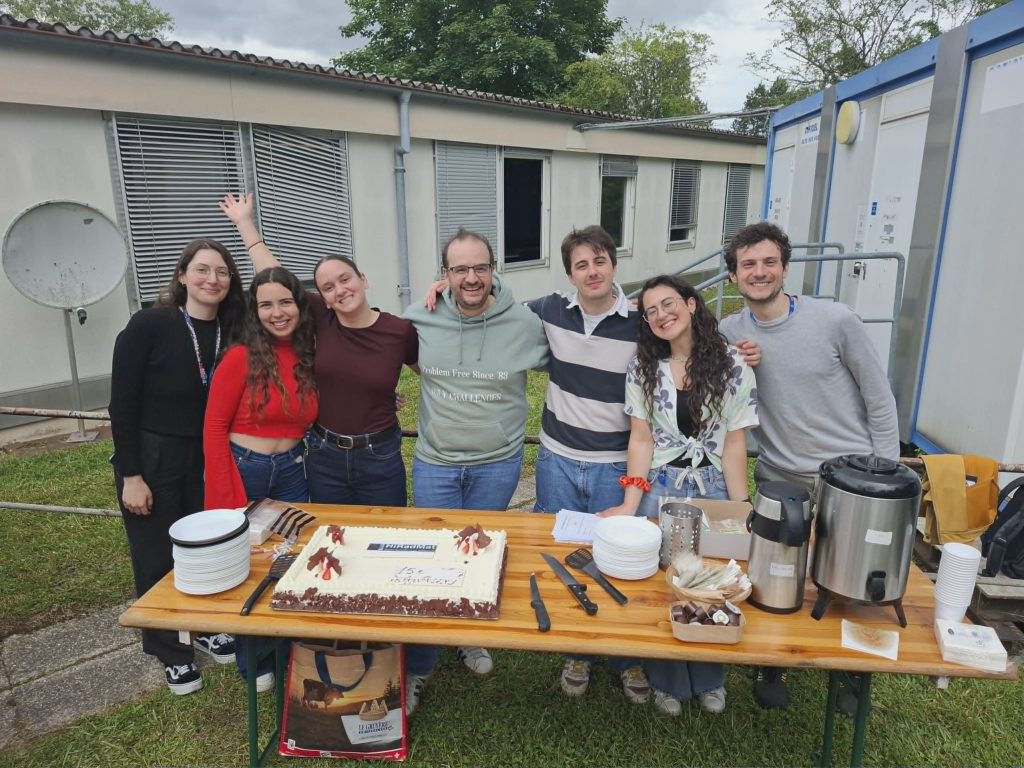
This year marks the 15th anniversary of the High-Radiation to Materials (HiRadMat) facility.
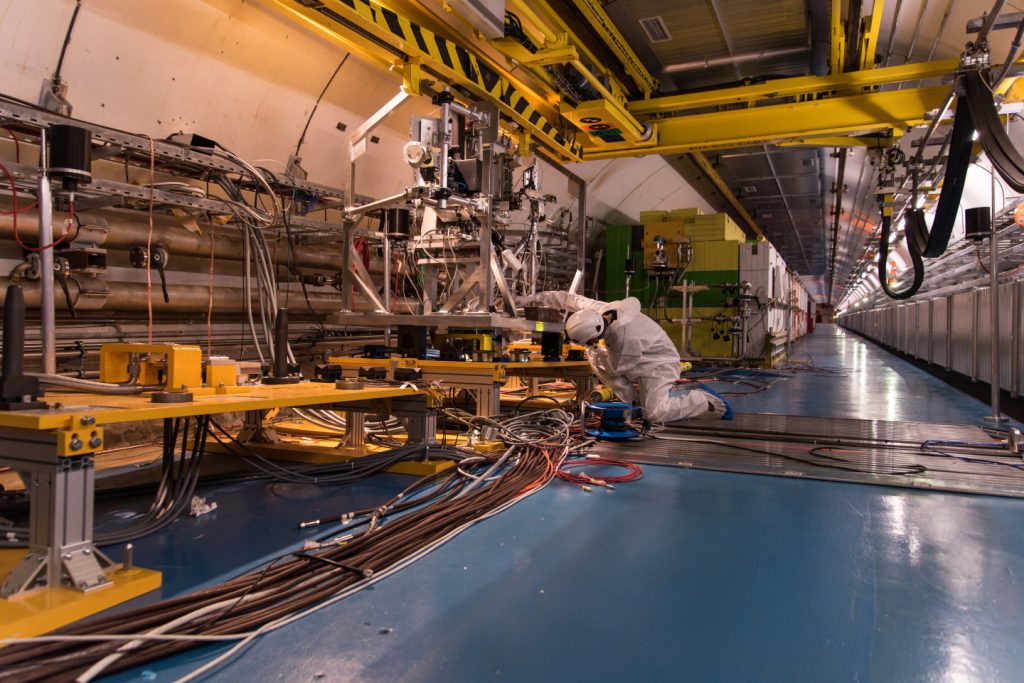
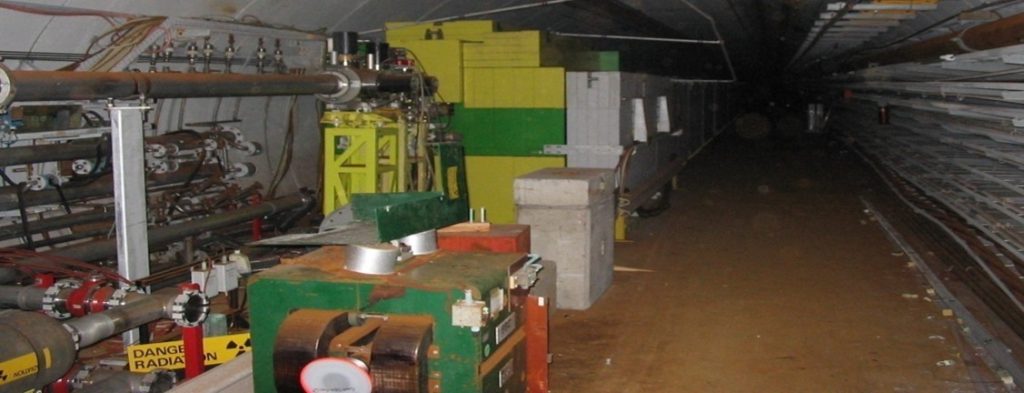
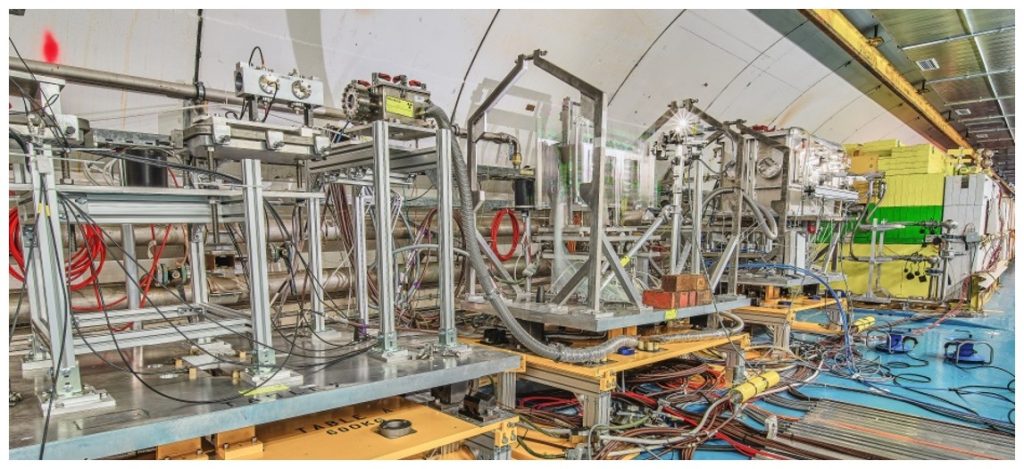
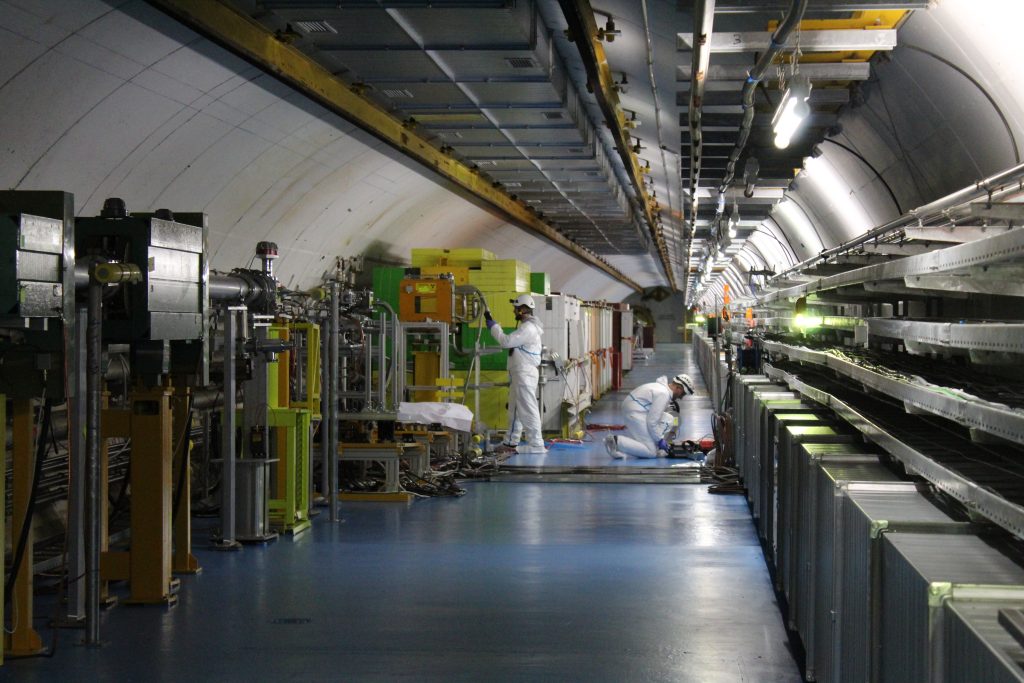
How it all started During a recent celebration of this important milestone, Nikolaos Charitonidis, HiRadMat Facility Coordinator, and Sebastien Evrard, BE-EA Group Leader, shared about HiRadMat’s early days as well as the challenges of the journey, from decommissioning the old West Area Neutrino facility (WANF) to designing a fully working facility that ran its first experiment and received the first beam in 2011. HiRadMat has come a long way since its original mission: conceived as a dedicated test bench for the Large Hadron Collider (LHC) collimators, HiRadMat now serves as CERN’s reference facility for high-intensity beam studies including both R&D and physics experiments.
Fifteen years of experiments and collaboration
Fifteen years later, the HiRadMat facility has hosted more than 50 experiments, covering materials science, accelerator technologies, beam diagnostics, particle development and plasma astrophysics. Beyond its scientific output, the facility has also become a training ground for future generations of scientists and engineers, contributing to more than 20 PhD and master’s theses. As a user facility at CERN, HiRadMat has taken part in several European Transnational Access programmes, making the laboratory accessible to researchers from all over the world.
FIREBALL IV and beyond
Among the experiments currently running at HiRadMat is FIREBALL, in collaboration with the University of Oxford. This experiment is designed to study the micro-instabilities of a high-intensity electron-positron beam interacting with low-density plasma. After three successful experimental campaigns, FIREBALL-IV (HRMT-76) will focus on testing minor changes to the experimental setup, enabling further developments on previous findings.
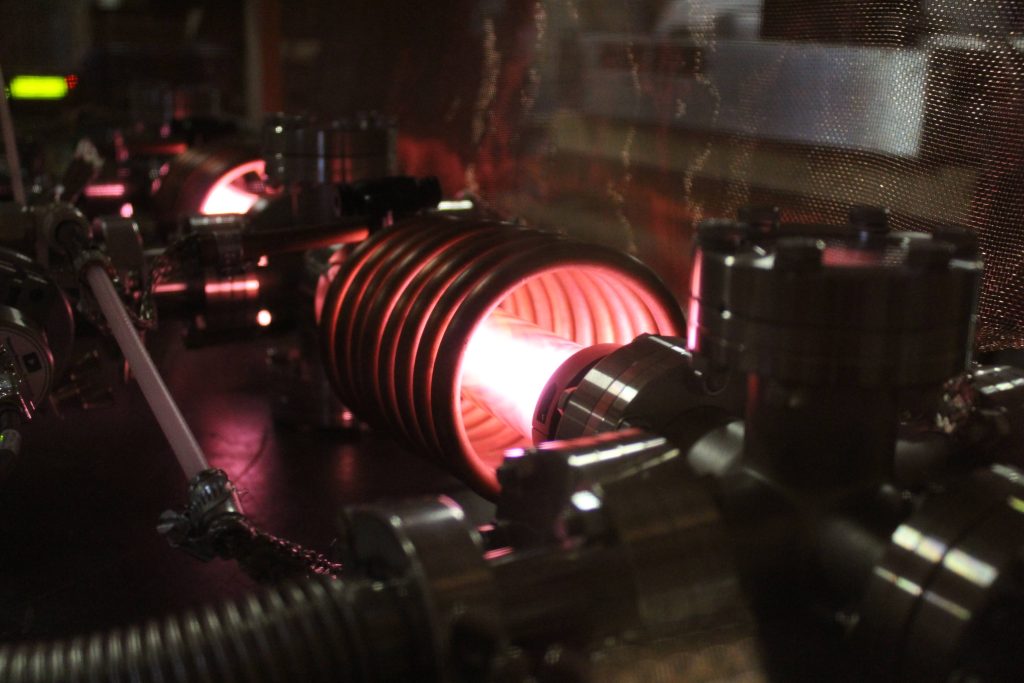
This experimental platform represents the first of its kind and will further develop in order to serve for similar studies in the HiRadMat facility. More broadly, this reflects the ongoing evolution of HiRadMat, building on 15 years of experience to support an increasingly diverse range of experimental programmes.