
Rebuilding a Critical Technology: How CERN is Preparing the Next Generation of Beryllium Vacuum Chambers
Isabel Bejar Alonso, Mickael Crouvizier, Thomas Demaziere, Leonel Ferreira for the Beryllium Project team
The discontinuation in 2023 of the last industrial supplier of beryllium vacuum chambers created a critical gap for high-energy physics. These ultra-thin components, installed at the interaction points of the Large Hadron Collider (LHC), are essential for upcoming upgrades. In response, CERN has established an in-house capability to manufacture these chambers, consolidating expertise in the manufacturing of high vacuum components in beryllium metal.
The CERN’s Beryllium Facility in Prévessin has been developed as a fully integrated manufacturing site. Completed within approximately one year, the 1000 m² installation covers the entire fabrication chain: precision machining, chemical and thermal treatments, cleaning, non-destructive testing, metallographic analysis, and electron-beam welding (EBW).
A defining feature of the facility is its environmental and contamination control. Negative-pressure enclosures, multi-stage HEPA filtration, and dedicated ventilation systems ensure airborne beryllium concentrations remain well below safety limits.
Electron-beam welding is one of the most critical steps in chamber fabrication. Long, thin sections must be joined with extreme geometric precision while maintaining ultra-high vacuum (UHV) compatibility and material integrity. Surface preparation is therefore essential, requiring advanced degreasing and etching prior to welding.CERN has commissioned a high-precision EBW system developed by Steigerwald Strahltechnik. Operating under high vacuum, the process enables contact-free welding with minimal thermal distortion.
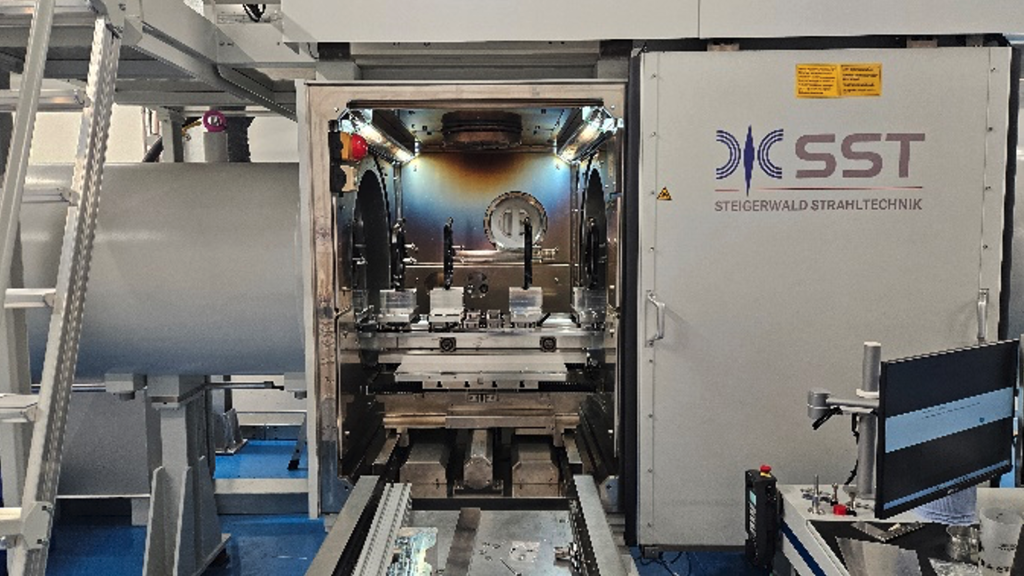
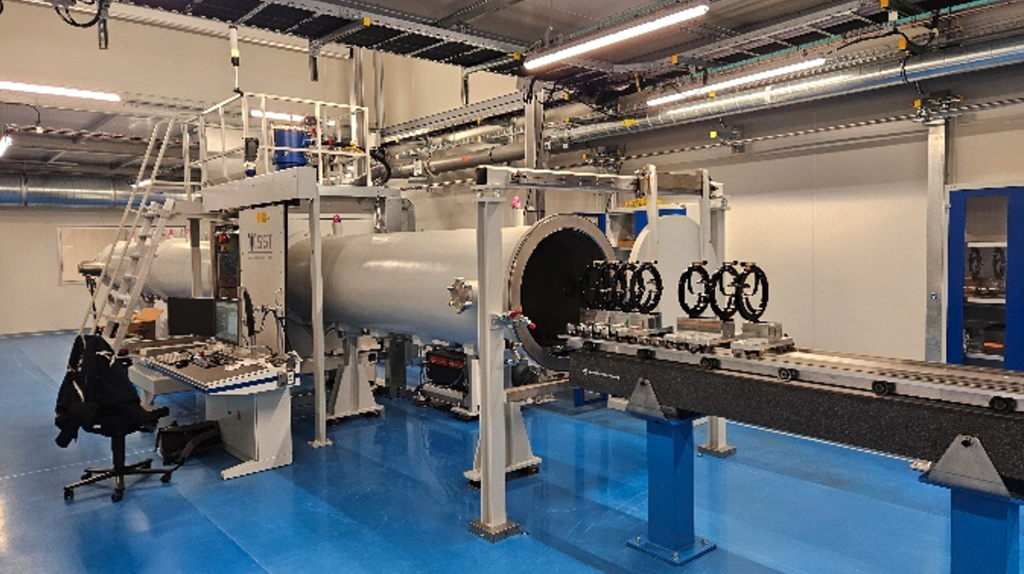
Figure 1: SST EBW machine at CERN’s beryllium facility
Metallographic preparation, including sectioning, grinding, and polishing, is performed in dedicated gloveboxes designed at CERN. These systems support both material quality control and weld qualification.
Mechanical testing of weldments is carried out on site. When needed, further analysis is done by advanced characterization techniques such as scanning electron microscopy with energy-dispersive spectroscopy (SEM-EDS) and X-ray diffraction (XRD) at CERN’s Materials Laboratory.
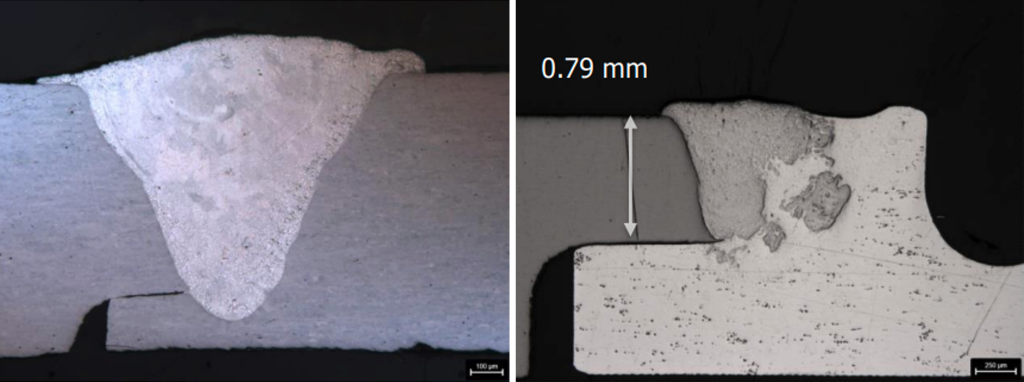
Early results show promising weld quality, including fine-grain microstructures free from imperfections, controlled weld penetration and weld pools fitting required geometries in prototype weldments. Within two months, qualification was achieved for both types of joints required for vacuum chambers: Be-EN AW-2219 and Be-Be.
The facility also includes a dedicated chemical surface treatment area. It is equipped with a closed-loop solvent degreasing machine and seven water-based immersion tanks, providing all the surface treatment processes required throughout the beryllium component manufacturing cycle.
As with other metallic materials, wet chemical processing involves the use of acids that present inherent hazards. These risks were addressed alongside those associated with beryllium handling through the implementation of dedicated air extraction and water recovery systems. In addition, continuous, seamless surfaces were established between the processing tanks and the facility floor to prevent the accumulation of both corrosive chemicals and beryllium salts. The entire installation was designed to facilitate decontamination activities, ensuring a clean and sustainable working environment over the long term.
As testing activities increase and component fabrication progresses, the facility is delivering valuable results by supporting the decontamination of both raw materials and machined parts, while also providing the high-quality surface finishes required for subsequent electron-beam welding and assembly operations.
By internalizing the manufacturing of beryllium vacuum chambers, CERN is re-establishing a capability that had nearly disappeared worldwide. This approach enables full control over critical processes, including welding and surface preparation, and allows rapid iteration and optimization during fabrication. With the Beryllium Facility, CERN is ensuring the continuity of a key technology for particle physics while opening new opportunities for innovation in advanced manufacturing.